About Ben Barnard
Ben Barnard is a Clinical Psychologist, writer and seeker of deeper meaning in a world that often feels fragmented and uncertain. With a keen interest in theology, mythology and the evolving landscape of human spirituality, he challenges conventional narratives and dares to ask difficult questions. His work is a journey—an exploration of faith, doubt, and the stories that shape our understanding of existence.
Drawing from history, philosophy, and personal experience, Ben weaves together thought-provoking insights that push beyond religious dogma and into the realm of honest spiritual inquiry. His writing is an invitation—to those who wrestle with their beliefs, who feel disillusioned by traditional religion, or who are searching for a new framework through which to engage with the mysteries of life.
In this age where old myths have lost their power and new ones have yet to be written, Ben offers a fresh perspective—one that embraces the unknown with curiosity, integrity, and a relentless pursuit of truth
Ben obtained both a Master’s Degree and a doctorate in clinical psychology from the University of Pretoria. He also received intensive training in classical psychoanalysis from the South African Institute for Psychotherapy and served for many years as mentor for trainee psychotherapists. He is married to Carina and has three children and five grand-children.

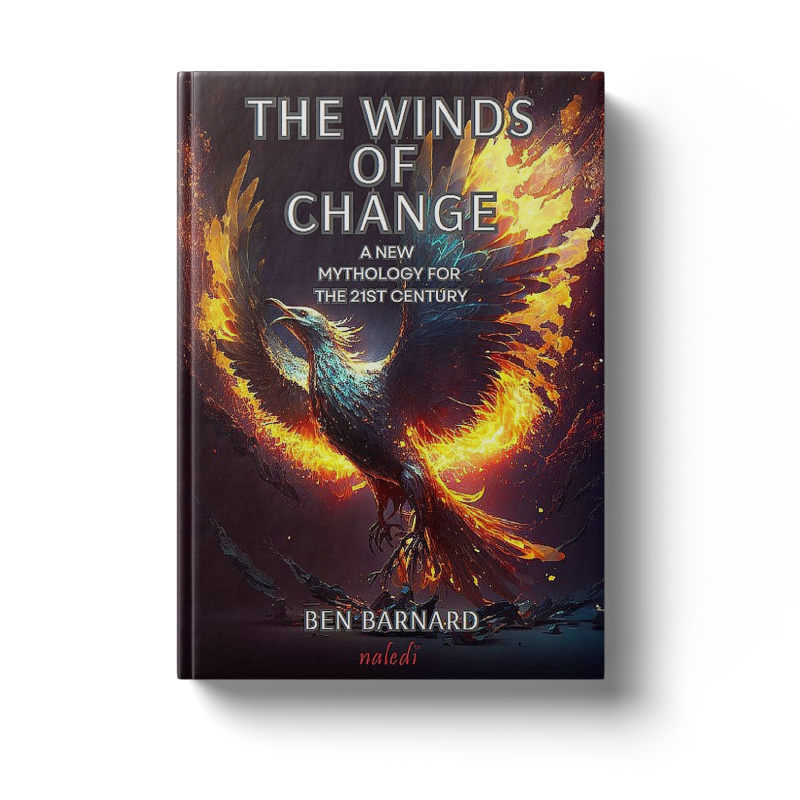
The Winds of Change: A new mythology for the 21st century (2025)
As a member of the 21st century, I recognize that we have entered a new period of evolutionary history. In our ever-changing world, nothing remains untouched by the winds of transformation. As a result, modern humanity finds itself in a constant state of dislocation, anxiety, and even depression.
This is where mythology once played a crucial role. Through myth, metaphor, and symbol, we expressed our understanding of the world around us—our social norms, spiritual beliefs, deepest fears and sorrows, as well as our hopes for the future. Mythology was our guiding light in times of change, carrying us forward with a sense of integrity and purpose.
But today, we find ourselves without redeeming myths. In the past, religion provided much of our collective mythology, shaping our worldview and offering meaning. Yet, for many, religion has gone stale, leaving us adrift in an existential vacuum.
If we are to navigate the 21st century, we need a new mythology—one that can guide us through one of the most drastic transitions in human history. This book is my humble attempt to offer a new frame of reference for those willing to step away from the comforts of the past and embark on an uncharted journey toward a new Promised Land.
The Winds of Change: A new mythology for the 21st century (2025)

As a member of the 21st century, I recognize that we have entered a new period of evolutionary history. In our ever-changing world, nothing remains untouched by the winds of transformation. As a result, modern humanity finds itself in a constant state of dislocation, anxiety, and even depression.
This is where mythology once played a crucial role. Through myth, metaphor, and symbol, we expressed our understanding of the world around us—our social norms, spiritual beliefs, deepest fears and sorrows, as well as our hopes for the future. Mythology was our guiding light in times of change, carrying us forward with a sense of integrity and purpose.
But today, we find ourselves without redeeming myths. In the past, religion provided much of our collective mythology, shaping our worldview and offering meaning. Yet, for many, religion has gone stale, leaving us adrift in an existential vacuum.
If we are to navigate the 21st century, we need a new mythology—one that can guide us through one of the most drastic transitions in human history. This book is my humble attempt to offer a new frame of reference for those willing to step away from the comforts of the past and embark on an uncharted journey toward a new Promised Land.
The Winds of Change: A new mythology for the 21st century (2025)
Reading the Bible literally can lead to dangerous theology. Throughout history, this has resulted in women being demonized—made out to be inferior to men and blamed for the fall of humanity. But is that really the truth? What if the story of the Fall was never meant to be read as historical fact, but rather as myth? And if that’s the case, are there alternative ways to understand this story that don’t degrade women?
In my journey, I also take a fresh look at the story of Samson, the strange but heart-breaking offering of Isaac, and the violent showdown on Mount Carmel. How should modern Christianity engage with these stories of horror and bloodshed? I don’t shy away from the hard questions—they demand to be asked, and they deserve thoughtful answers.
Even the central symbol of Christianity—the death and resurrection of Christ—requires critical reflection. And then there’s the so-called “death of God.” Has Christianity run its course? Should we be searching for new ways to interpret the Christ-experience—ways that allow modern people to connect with Jesus more authentically? Or is it time to move beyond religion altogether in search of a new spiritual reality?
The Winds of Change: A new mythology for the 21st century (2025)

Reading the Bible literally can lead to dangerous theology. Throughout history, this has resulted in women being demonized—made out to be inferior to men and blamed for the fall of humanity. But is that really the truth? What if the story of the Fall was never meant to be read as historical fact, but rather as myth? And if that’s the case, are there alternative ways to understand this story that don’t degrade women?
In my journey, I also take a fresh look at the story of Samson, the strange but heart-breaking offering of Isaac, and the violent showdown on Mount Carmel. How should modern Christianity engage with these stories of horror and bloodshed? I don’t shy away from the hard questions—they demand to be asked, and they deserve thoughtful answers.
Even the central symbol of Christianity—the death and resurrection of Christ—requires critical reflection. And then there’s the so-called “death of God.” Has Christianity run its course? Should we be searching for new ways to interpret the Christ-experience—ways that allow modern people to connect with Jesus more authentically? Or is it time to move beyond religion altogether in search of a new spiritual reality?
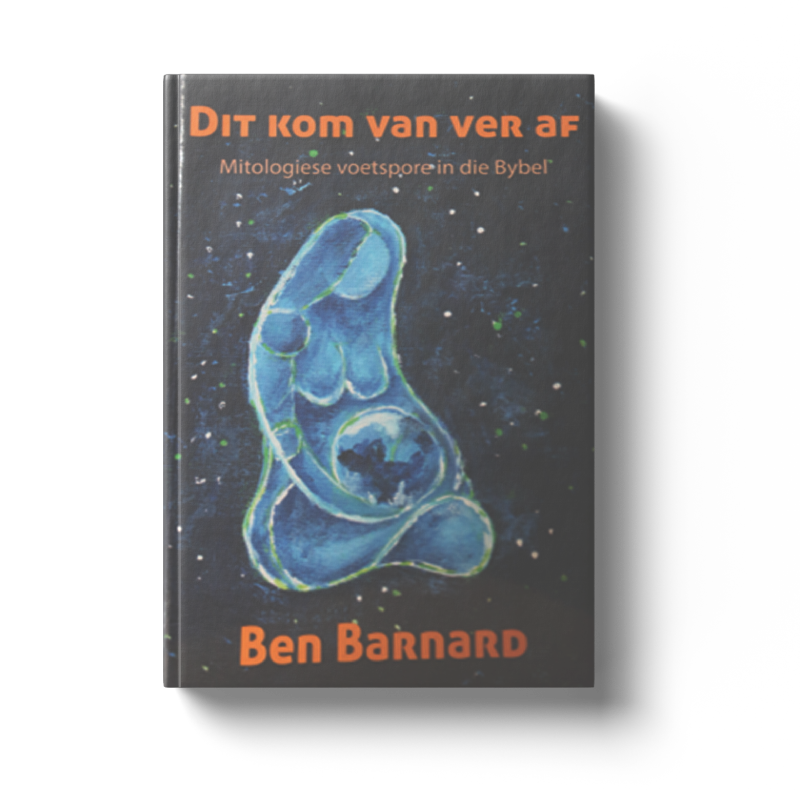
Dit kom van ver af: Mitologiese Voetspore in die Bybel (2016)
Hierdie is my magnum opus; ‘n boek waaraan ek 5 jaar lank gewerk het. Dit verken die mitologiese agtergrond van baie van ons Bybelverhale en soek antwoorde op vrae soos: is die skeppingsverhale ‘n korrekte weergawe van wat tydens die skepping plaasgevind het? Hoekom kry die vrou so ‘n negatiewe rol in die Paradysverhaal en is sy regtig die oorsaak dat sonde die wêreld binnegekom het? En hoe het dit gebeur dat Noag se storie van die groot vloed ook in ander volke se mitologie voorkom? En die Jonaverhaal… Kan ons dit regtig sluk?!
Die Nuwe Testament is ook nie so vry van mitologiese invloede as wat ons graag sou wou glo nie. Die maagdelike geboorte is een so ‘n voorbeeld, maar daar is baie meer. Die basiese tema van die boek is dat ons hierdie verhale – wat in die meeste wêreldgodsdiente voorkom – nie letterlik durf lees nie. Die fout wat die kerk gemaak het, was om mitologiese verhale as geskiedenis aan te bied en die gevolg is ‘n klomp ongeloofwaardige stories (as ‘n mens dit letterlik wil glo).
Deur die mitologie toe te laat om sy boodskap oor te dra, kry die verhale egter dikwels ‘n nuwe, verrykende betekenis (wat ons natuurlik in detail eksploreer). Dis ‘n boek wat vra vir brawe denke, maar die resultaat is (hopenlik) ‘n ruimer en meer insiggewende prentjie van die verhale wat in die Bybel opgeteken is.
Dit kom van ver af: Mitologiese Voetspore in die Bybel (2016)

Hierdie is my magnum opus; ‘n boek waaraan ek 5 jaar lank gewerk het. Dit verken die mitologiese agtergrond van baie van ons Bybelverhale en soek antwoorde op vrae soos: is die skeppingsverhale ‘n korrekte weergawe van wat tydens die skepping plaasgevind het? Hoekom kry die vrou so ‘n negatiewe rol in die Paradysverhaal en is sy regtig die oorsaak dat sonde die wêreld binnegekom het? En hoe het dit gebeur dat Noag se storie van die groot vloed ook in ander volke se mitologie voorkom? En die Jonaverhaal… Kan ons dit regtig sluk?!
Die Nuwe Testament is ook nie so vry van mitologiese invloede as wat ons graag sou wou glo nie. Die maagdelike geboorte is een so ‘n voorbeeld, maar daar is baie meer. Die basiese tema van die boek is dat ons hierdie verhale – wat in die meeste wêreldgodsdiente voorkom – nie letterlik durf lees nie. Die fout wat die kerk gemaak het, was om mitologiese verhale as geskiedenis aan te bied en die gevolg is ‘n klomp ongeloofwaardige stories (as ‘n mens dit letterlik wil glo).
Deur die mitologie toe te laat om sy boodskap oor te dra, kry die verhale egter dikwels ‘n nuwe, verrykende betekenis (wat ons natuurlik in detail eksploreer). Dis ‘n boek wat vra vir brawe denke, maar die resultaat is (hopenlik) ‘n ruimer en meer insiggewende prentjie van die verhale wat in die Bybel opgeteken is.
495 Bladsye, prys R450. Verkrygbaar vanaf die outeur by ben.barnard01@gmail.com
Mag ons Nuut oor God Dink? (2011)
Die boek is meer gewaagd as sy voorganger en verken kontroversiële vrae waarmee ons almal soms worstel. Dit betrek nuwe ontwikkelinge in die teologie waaraan Suid-Afrikaners selde blootgestel word. Die boek nooi lesers uit om vernuwend te dink oor sake wat die wese van ons godsdiens raak, want Godsbeskouings wat 2000 jaar oud is, loop die risiko om uitgedien te raak as dit nie tred hou met ons veranderende samelewing nie.
Die boek is vir denkende Christene wat steeds glo, maar wat a.g.v. die vrae wat hulle vra, dikwels ontuis voel in die tradisionele geloofsgemeenskap.
Mag ons Nuut oor God Dink? (2011)

Die boek is meer gewaagd as sy voorganger en verken kontroversiële vrae waarmee ons almal soms worstel. Dit betrek nuwe ontwikkelinge in die teologie waaraan Suid-Afrikaners selde blootgestel word. Die boek nooi lesers uit om vernuwend te dink oor sake wat die wese van ons godsdiens raak, want Godsbeskouings wat 2000 jaar oud is, loop die risiko om uitgedien te raak as dit nie tred hou met ons veranderende samelewing nie.
Die boek is vir denkende Christene wat steeds glo, maar wat a.g.v. die vrae wat hulle vra, dikwels ontuis voel in die tradisionele geloofsgemeenskap. 294 Bladsye, prys R300. Beskikbaar vanaf die outeur by: ben.barnard01@gmail.com
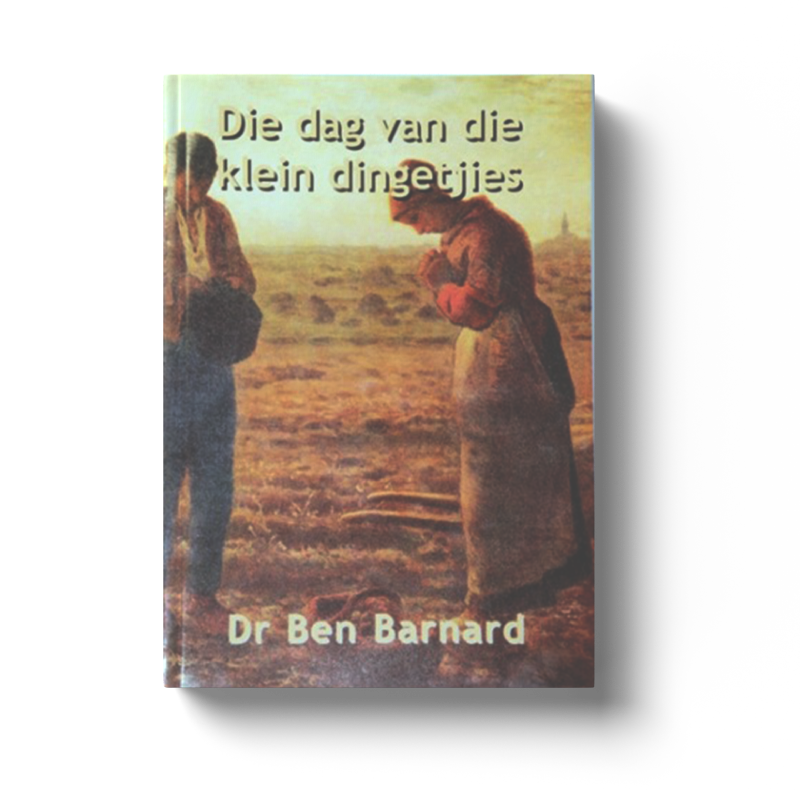
Die Dag van die Klein Dingetjies (2000)
Dis ‘n boek oor geloof en troos wat geskryf is tydens die oorgang na ‘n nuwe politieke bedeling in Suid-Afrika in 1994. Dit fokus op hoe ons God in die alledaagse omstandighede van ons bestaan kan raaksien en ontmoet en sodoende ons daaglikse bestaan kan transendeer. Dit is konserwatiewe, tradisionele teologie waarmee ons grootgeword het.
Die Dag van die Klein Dingetjies (2000)

Dis ‘n boek oor geloof en troos wat geskryf is tydens die oorgang na ‘n nuwe politieke bedeling in Suid-Afrika in 1994. Dit fokus op hoe ons God in die alledaagse omstandighede van ons bestaan kan raaksien en ontmoet en sodoende ons daaglikse bestaan kan transendeer. Dit is konserwatiewe, tradisionele teologie waarmee ons grootgeword het.